


EU drops sanctions on Usmanov and Fridman
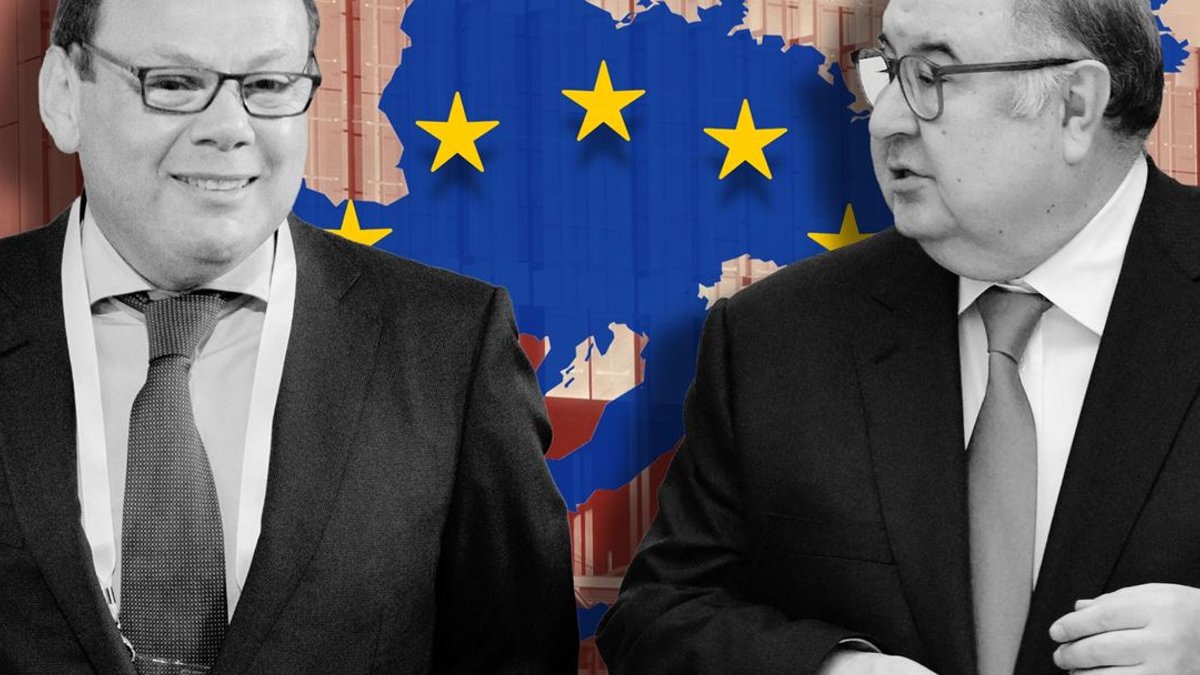
After failing to overturn their European Union sanctions through legal proceedings, some Russian oligarchs have turned to diplomatic negotiations. Alisher Usmanov and Mikhail Fridman, two Russian billionaires, spent years contesting the EU’s asset freezes and travel restrictions. Their court challenges did not succeed, but in late September, political discussions among EU member states led to their removal from the sanctions list—a result their legal efforts could not achieve. France and Luxembourg conditioned their approval of renewed sanctions on excluding Usmanov and Fridman from the measures. The EU initially imposed sanctions on both men in 2022 as part of broader restrictions targeting Russian political and business figures following Moscow’s full-scale invasion of Ukraine.
Since then, Usmanov and Fridman have pursued legal avenues to reverse their designations, seeking to regain control of their EU-held assets and end movement bans. Court records show how sanctioned billionaires challenge the evidence underpinning their listings – and occasionally win.
Entities subject to sanctions face two primary options: requesting the EU Council to review their listing or filing an appeal with the European Union General Court (EGC), part of the Court of Justice of the EU. The two routes are independent, each with its own deadlines and procedures. Sanctions are justified based on criteria defined in the Council’s regulation addressing Russia’s war in Ukraine. Member states compile evidence for each listing, submitting it to the European External Action Service, which often relies on publicly available sources like media reports. Listings undergo a six-month review cycle.
Legal Challenges to Sanctions
Legal representatives for sanctioned individuals note that successful court challenges depend on demonstrating an error in assessment-either insufficient evidence or outdated justification for the listing. A sanctioned entity has roughly two and a half months to file a so-called “action for annulment” at the EGC.
Usmanov’s original sanction stemmed from alleged ties to Russian President Vladimir Putin, referenced in a Forbes article, and his ownership of Kommersant, which published an essay by former President Dmitry Medvedev endorsing policies the EU deemed destabilizing to Ukraine. Usmanov contested the Forbes claim in a Hamburg court, which ruled in his favor. Later, during proceedings before the EGC, the Council argued that the decision was not solely based on the Forbes report but also incorporated updated legal criteria and evidence, maintaining his designation as a “leading businessperson.” Despite filing five separate cases—including an appeal to the European Court of Justice—none succeeded.
Fridman had greater success. His initial listing relied on four pre-2022 news articles about him. His lawyers argued the evidence was outdated and didn’t justify sanctions. In April 2024, the General Court overturned both his February 2022 listing and its September 2022 extension, citing the Council’s failure to provide new supporting information.
Legal errors in sanctions “a lot more than people think,” according to Amélie Beauchemin, a lawyer at WJ Avocats. Her firm defended Farkhad Akhmedov, an Azerbaijani-Russian billionaire and former politician whose wealth originated in natural gas. His sanction was based on online sources, including a Wikipedia entry and a Forbes profile, containing outdated information. The Council removed Akhmedov from the list during its September 2023 renewal—over eight months before a court later ruled in his favor.
Related Post: North East firm expands with new cyber security division
Delistings and Reimpositions
Two other Russian businessmen, Grigory Berezkin (oil and energy) and Alexander Shulgin (former CEO of e-commerce firm Ozon), were also removed from the sanctions list in September 2023. Both had contested their designations in court, with officials later determining their legal basis was weakly supported. Such outcomes remain uncommon; sanctions typically endure legal challenges. Even if a court overturns a sanction, new evidence could lead to reinstatement. For example, Fridman was relisted while his appeal was pending.
The Council justified his redesignation under updated criteria for influential figures in Russia’s key economic sectors, citing his ownership stake in Alfa-Bank, the country’s largest private bank. Though Fridman agreed to sell the stake in 2023, the transaction was only officially reported completed in 2025. The EGC has seen a rise in sanctions challenges, with 84 new cases filed in 2025, up from 47 the prior year, regarding Russia-related measures.
Since March 2022, the EU has delisted 22 entities (excluding deceased individuals), according to Sanctions Finder. Of these, five removals resulted from political negotiations. In March 2025, Hungary, with Slovakia’s backing, successfully advocated for the delisting of three individuals: Viatcheslav Kantor (a Russian-British-Israeli businessman linked to Acron Group, Russia’s largest fertilizer producer), Gulbakhor Ismailova (Usmanov’s sister), and Mikhail Degtyarev (Russia’s sports minister, sanctioned in 2014 for supporting separatist movements in eastern Ukraine).
Neither Usmanov nor Fridman depended exclusively on litigation. Both withdrew their court cases in April and June 2026, respectively. This time, their removal was secured through France and Luxembourg, which refused to endorse renewed sanctions on nearly 3,000 Russian individuals and companies unless Usmanov and Fridman were excluded. France reportedly sought Usmanov’s delisting to facilitate the release of French citizens detained in Azerbaijan, while Luxembourg aimed to block his €15 billion claim over frozen assets in the country. In response, Lithuania, Latvia, and Estonia imposed national-level sanctions against both men.
The EU retains the authority to relist them at any time. However, EU foreign policy chief Kaja Kallas stated on October 5 that the bloc has no immediate plans to reinstate sanctions. She clarified that member states “are free to put forward names that should be included in the sanctions list,” leaving the final decision to the Council. Tom Keatinge, director of the Centre for Finance and Security at the Royal United Services Institute, criticized the concession as “a serious mistake” that sets “a dangerous precedent.”
With no renewal scheduled until 2029, the deadline to file lawsuits expires in November. Afterward, the only remaining option is submitting a delisting request to the Council, using arguments similar to those made in court. The EU periodically reviews sanctions to verify whether the original justifications remain valid. If a court overturns a decision, the Council may reimpose sanctions if new evidence emerges. Currently, the Council’s decision to remove Usmanov and Fridman stands, meaning they are no longer subject to EU sanctions, at least until September 2029.
Implications of the Extended Renewal Timeline
Lawyers noted that the extended renewal period may create administrative burdens and could affect clients’ rights. After that date, parties may pursue a delisting request to the Council, presenting arguments similar to those used in court.


