


EU-Canada Critical Minerals Partnership Tested at Montreal Summit
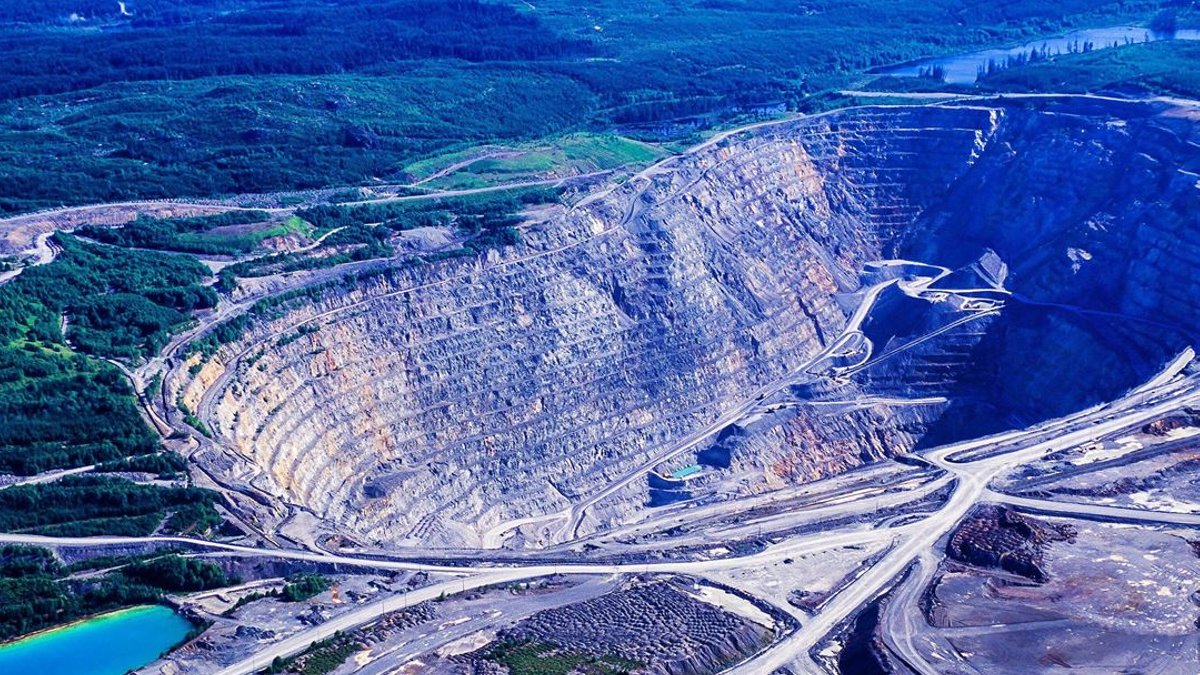
In Alberta, Canada, Ronald Ewasiuk, mayor of Bruderheim, sees opportunity where others see raw maps and mineral claims. Standing over a paper map in his office, he points to a planned hydrometallurgical facility set to process minerals from the Northwest Territories. For Ewasiuk, a former oil worker, the arrival of European investment through critical minerals could revitalize Canada’s industrial heartland the way oil once did. The first real test of closer EU-Canada ties will come at a Montreal summit this week, where both sides aim to turn years of memorandums and strategic partnerships into actual investment.
China’s Grip and Europe’s Search for Alternatives
Europe’s reliance on critical raw materials is stark. The European Court of Auditors warned that 10 of 26 critical raw materials are fully imported, with none of the rare earths used in the bloc processed domestically. China dominates global production, accounting for 60 per cent of output and 90 per cent of refining capacity. Breaking this dependency is central to the EU’s critical minerals policy, but progress has stalled without concrete partnerships.
Canada, home to 34 critical minerals including uranium, nickel, cobalt, and copper, is positioned to fill the gap. “The EU has almost no domestic raw materials,” said Ollie Sheldrick of Clean Energy Canada. “If it’s serious by doing away with China, a partnership with Canada is a logical move.”
Trade Tensions and Investment Needs
Canada’s motivation for deeper EU ties comes from evolving trade conditions. The U.S. has imposed a 50 per cent tariff on Canadian goods over access disputes to critical minerals, with Washington reportedly seeking preferential rights in Canadian mines. This has pushed Canada to diversify, with European investment seen as a lifeline. “Trump’s aggressive, coercive trade policies have made it clear that like-minded countries like Canada, the EU and member states have to work together,” said Lawrence Herman of the C.D. Howe Institute. “There’s now a very strong foundation in place for both Canada and Europe to do a separate deal on critical minerals.”
Yet Canada needs more than political goodwill. Its mineral industry has shed smelters over the past decade, becoming a “mine-and-ship” nation that exports raw materials for others to refine, mainly to China. Ottawa has allocated C$2 billion to its Critical Minerals Sovereign Fund, but public money alone cannot cover the sector’s demands. “Access to capital is one of the top risks for the Canadian mining industry,” said John Steen of the Bradshaw Research Institute. “Having a friendly and aligned partner like the EU would be very positive.”
The European Investment Bank is expected to sign a framework financing agreement with Ottawa at the summit, a move that could unlock European capital for Canadian projects. Canada’s restrictions on Chinese state-backed investments may also create openings for European firms. Still, challenges remain: transport costs, EU regulatory standards, and a lack of clarity on which minerals the EU prioritizes. Of Canada’s 34 critical minerals, 24 are deemed critical by the EU, but no shared priority list has been established.
“Right now, investors do not understand what they need to be looking for to ensure they’re separating the wheat from the chaff,” said John Steen. “That means there needs to be a strategic plan for the Canada-EU partnership from mining to recycling.” The summit’s success hinges on turning partnerships into timelines and financing, not just intentions.
Financing and Strategic Clarity
The European Investment Bank’s pending approval for foreign bank status in Canada represents a critical step toward unlocking financing. The EIB has formally applied for an exemption, which could pave the way for direct capital flows to Canadian projects. However, the application carries no binding funding commitments, leaving investors cautious. Without a shared priority list of minerals, European firms lack clear guidance on where to focus resources.
Cooperation Challenges
Transport logistics pose additional hurdles. Canada’s mineral trade remains oriented toward the United States, requiring new infrastructure to redirect supplies to Europe. Regulatory standards between the two regions also demand alignment. These factors compound the difficulty of establishing streamlined supply chains. “It took China three decades to build a critical minerals supply chain,” John Steen of the Bradshaw Research Institute observed. “The EU and Canada can do it faster, but they aren’t going to turn on a dime.”
The summit’s outcome hinges on concrete action. While Ewasiuk envisions growth in Bruderheim, he acknowledges that timelines matter. “What we need to see out of Montreal is a concrete, long-term plan to do that with real investment behind it and timelines that are realistic,” Steen added. The next mine, refinery, or processing plant’s location—and its financier—remains uncertain.
Technology Cooperation and Unfulfilled Partnerships
Technology cooperation is another area for collaboration, Steen notes, as the Canadian mining industry requires significant technological know-how to develop. Some EU countries are making great progress in developing the necessary technologies to support this sector.
Canada and the EU established a framework for cooperation through their 2021 Strategic Partnership on Raw Materials and a 2026 letter of intent between the European Investment Bank and Canada. However, these partnerships have yet to translate into significant investment, Sheldrick explained.


