


Trucking Delays on the Rise Again
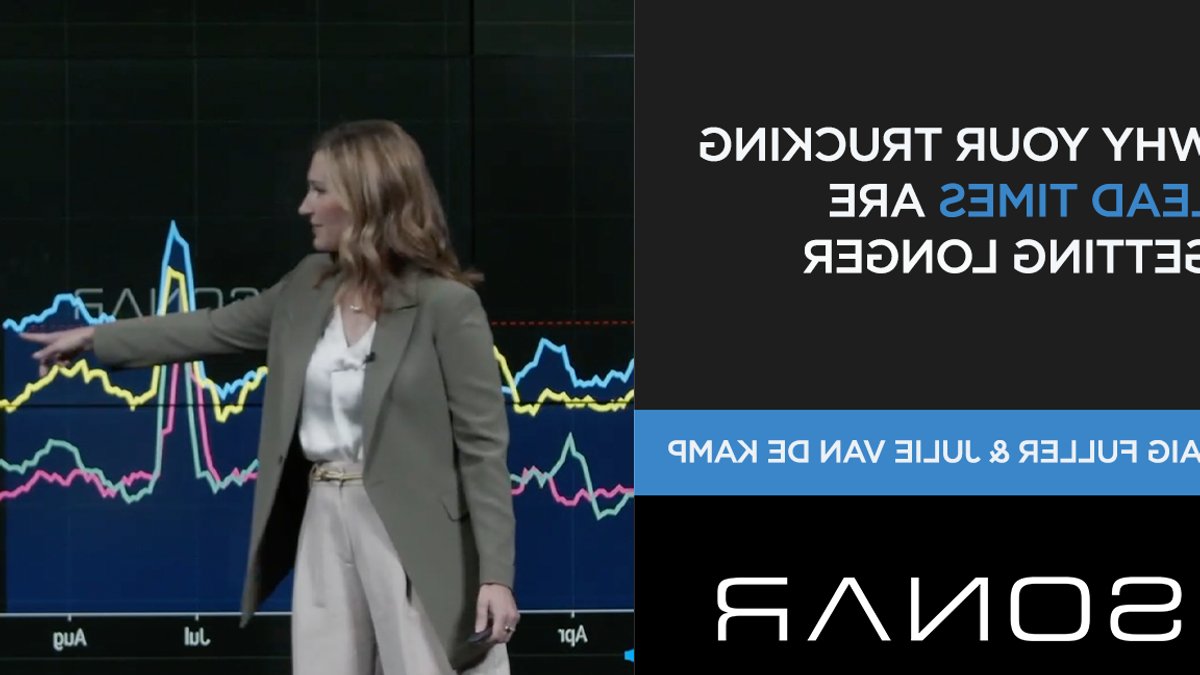
National truckload tender lead times have reached 3.71 days, the highest level in at least three years, according to FreightWaves Sonar data. This marks a notable rise from roughly 3.5 days a year ago and lows of around 3.25 days seen in 2023 and 2024.
The figure is holding steady even during August, a period that historically sees lead times fall. Craig Fuller attributed the sustained rise to three converging forces: shippers deploying more sophisticated supply chain forecasting tools, a shift back toward contract freight that carries longer natural lead times, and inventory holders who are not in a rush and are tendering loads earlier to secure capacity ahead of a tightening market.
Regional variation in lead times is significant. West Texas markets — covering Amarillo, Lubbock, Odessa, and Abilene — showed a tender lead time of 7.53 days, driven largely by oil patch logistics. St. Louis came in at 3.42 days, just below the national average.
Related: FBI Seeks Truck Drivers in Tax Fraud Probe
Fuller noted that this is consistent with that market’s outsized tender rejection rate of 27.6%, compared with a national average of roughly 13.5%. Markets with high rejection rates compress lead times because freight gets re-tendered repeatedly as carriers decline loads.
Fuller explained that tender rejections and lead times are related, but don’t always align. Julie Van de Kamp added that extra lead time gives carriers room to reposition equipment, reducing the urgency that drives rejection spikes.
In Atlanta, outbound volumes rose 3.5% over the most recent two-week period, while tender rejections climbed only 2% — in part because lead times in that market were up 2.4%. Van de Kamp said that carriers are saying, “I have an extra day to deal with it. I can deadhead trucks into that market.”
Despite volumes rising, spot rates out of Atlanta have not increased. Fuller and Van de Kamp characterized the broader truckload environment as unusually measured, with contract rates continuing to move higher while spot rates remain near record levels without spiking.
Related: Proficient Auto Logistics gains 25% market share
Fuller highlighted Sonar’s Coverage Guide tool as a practical application of lead time data. Markets flagged as currently tight and tightening — such as outbound New Jersey — warrant immediate tendering, while markets showing current tightness but a loosening trend, including outbound New York, Pennsylvania, and Illinois, may allow shippers to wait.
Fuller warned that brokers who push difficult, tightening-market loads to later in the day face compounding costs: “If you’re going to lose a little bit of money on it in the beginning of the day, you’re going to lose a lot of money on it at the end of the day.”
National truckload tender lead times are likely to continue to be a key factor in the freight market, and understanding the trends and regional variations in lead times will be essential for shippers and brokers to make informed decisions about their logistics and supply chain management.

FBI Seeks Truck Drivers in Tax Fraud Probe


