


Zuckerberg Must Prove He Is Not a One-Hit Wonder
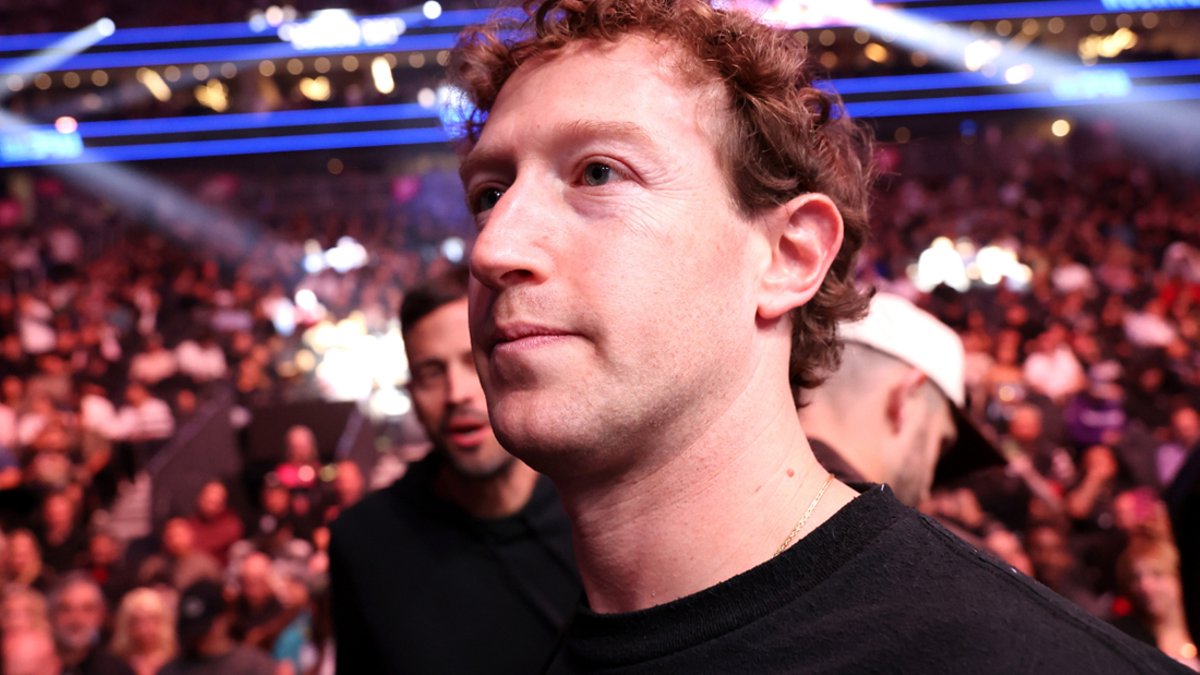
Mark Zuckerberg’s Meta is facing a reckoning. Investors are asking if the company has become a one-hit wonder, a question amplified by recent legal rulings that found the group designed its products to be addictive.
The Big Tobacco comparison
Analyst Mark Mahaney with Evercore ISI has repeatedly heard the “Big Tobacco” comparison, though some pundits find it misleading. Meta certainly has deep enough pockets to appeal these decisions and fight many similar claims, unlike tobacco giants that have refocused on core businesses. The verdicts are a particular threat to Meta, which generates the vast majority of its revenue from advertising on its apps, including Facebook, Instagram, Messenger, Threads, and WhatsApp.
Global trade tensions haven’t helped. According to the group’s 2024 accounts, 11% of its advertising revenue is derived from China. And the political clamour for a regulatory crackdown on social media is unlikely to abate anytime soon. The stock market has soured on the ‘magnificent seven’ tech giants, partly because AI epitomizes Arthur C. Clarke’s dictum that “any sufficiently advanced technology is indistinguishable from magic,” leaving even experienced analysts speculating about likely winners and losers.
Adapting to survive
It is true that Meta has diversified primarily by buying other successful apps such as Instagram and WhatsApp. As David Kirkpatrick argues in The Facebook Effect, “what doomed competitors is that they lacked Facebook’s willingness to continually reinvent itself.” Even today, 22 years after the platform’s launch, the number of daily active users is still climbing by 5% year-on-year to 2.1bn in February 2026. To be fair, Threads, Meta’s homegrown microblogging site, has emerged as the principal rival to X.
Read Also: GM Takes Big Loss on China Overhaul
Yet Zuckerberg’s critics point out that X’s owner Elon Musk has been responsible for launching seven billion-dollar companies. That track record persuaded many investors to overlook his disastrous reign at the Department of Government Efficiency. In contrast, Zuckerberg’s most audacious decision was to place a big bet on the metaverse, a virtual reality revolution that never happened. The New York Times recently reported that this gamble cost the group $80bn, though Reality Labs, the unit responsible for the metaverse, has developed many other intriguing products such as AI-powered RayBan glasses.
While this debacle has eroded investors’ trust, Meta is trying to pivot. After the derisive reaction to the launch of its Llama 4 large language model and the failure of its largest application “Behemoth,” the group effectively started again from scratch. Alexandr Wang, co-founder of Scale AI and the world’s youngest self-made billionaire, has been hired as the first head of AI. The new system will initially only be accessible to partners within the company’s technological ecosystem.
The cost of a gamble
Bloomberg predicts Meta’s ambitious AI investments will shrink free cash flow by 83% from $48bn in 2025 to $8bn this year. Motley Fool analyst Daniel Sparks expects revenues to grow by 30% this year, although he also believes costs will soar by at least 37%. This disparity likely explains why some senior executives recently told Reuters that the group is considering cutting 16,000 jobs, 20% of its workforce, having previously laid off 21,000 staff since November 2022.
Some managers insist this is driven by AI efficiency while group spokesperson Andy Stone told the news agency that “this is speculative reporting about theoretical approaches,” which, although true, leaves stakeholders none the wiser. This cryptic statement may partly reflect the reality that Meta doesn’t have to worry too much about investor sentiment. Although the group went public in 2012, Zuckerberg controls a clear majority of the voting shares, suggesting his worldview has changed since 2006 when he told Kirkpatrick that “I never wanted to run a company” but that “a business is a good vehicle for getting stuff done.”
Read Also: Former Alameda CEO Caroline Ellison Nears Release
Investing in the future
His new leadership style has presented shareholders with an unedifying choice: ‘shut up or sell up.’ To make that call, they must strive to read the runes in one of the most unpredictable competitive contests in the history of capitalism. The most significant ‘known unknowns’ facing Meta include which company will finally emerge as market leader, how enduring that competitive advantage will prove, and how long they need to maintain such a high level of investment.
Lex, the respected Financial Times commentator, concluded after a forensic analysis of Amazon, Alphabet, Apple, Meta, and Microsoft’s spending that “Big Tech may not make its money back, but it will almost certainly live to tell the tale.” That is hardly a ringing endorsement but some analysts worry whether consumers will buy in to the all-singing, all-dancing, all-knowing model of AI pioneered by the likes of Meta or be happier with a simpler, cheaper model they can plug into their laptop, tablet, or smartphone.
What is apparent is that Zuckerberg is, at least for now, as passionate about his businesses as Musk and Ford were. He created Face Mash, Facebook’s precursor, became so invested in the metaverse that participants in internal virtual meetings were encouraged to join as avatars, and is building an AI agent to help him run the business. You can accuse Meta’s CEO of many things, but even his fiercest critics must reluctantly concede that he has led by example.

GM Takes Big Loss on China Overhaul


