


J.B. Hunt Sees Multiple Minibids This Summer
J.B. Hunt Transport Services executives said the freight industry is in the early innings of supply correction, with supply-side limitations potentially capping the recovery’s upside when demand increases. Management noted growing labor pressures, with driver recruitment needs at their highest level since 2022.
Driver recruitment is getting tougher due to various factors, including strict enforcement of English-language proficiency requirements and non-domiciled CDL restrictions. The impacts of these crackdowns were amplified by actions against ELD providers and driver schools.
The exodus of drivers from the industry began before the crackdowns, with many small operators leaving due to poor economics.
Higher fuel prices, which most small operators can’t recoup through fuel surcharges, are the latest headwind for this segment of the market. The Supreme Court’s ruling widening broker liability exposure has added another bottleneck for driver hiring, driving up insurance costs and making it harder for new drivers to enter the market.
These actions have been a net positive for large carriers, as the bottom layer of capacity, which often relies on cheap rates, is being removed. Large fleets have reported significant improvements in equipment utilization, with contractual rate renewals yielding low-double-digit increases.
J.B. Hunt has made significant additions to its driver recruiting teams in recent weeks, management said at Deutsche Bank’s Chicago Industrials Summit. While wages are moving up in certain regions, the company possesses some recruiting advantages, including its dedicated segment, which maintains an average length of haul of just 172 miles.
Related: RXO Gains Ground in Freight Market
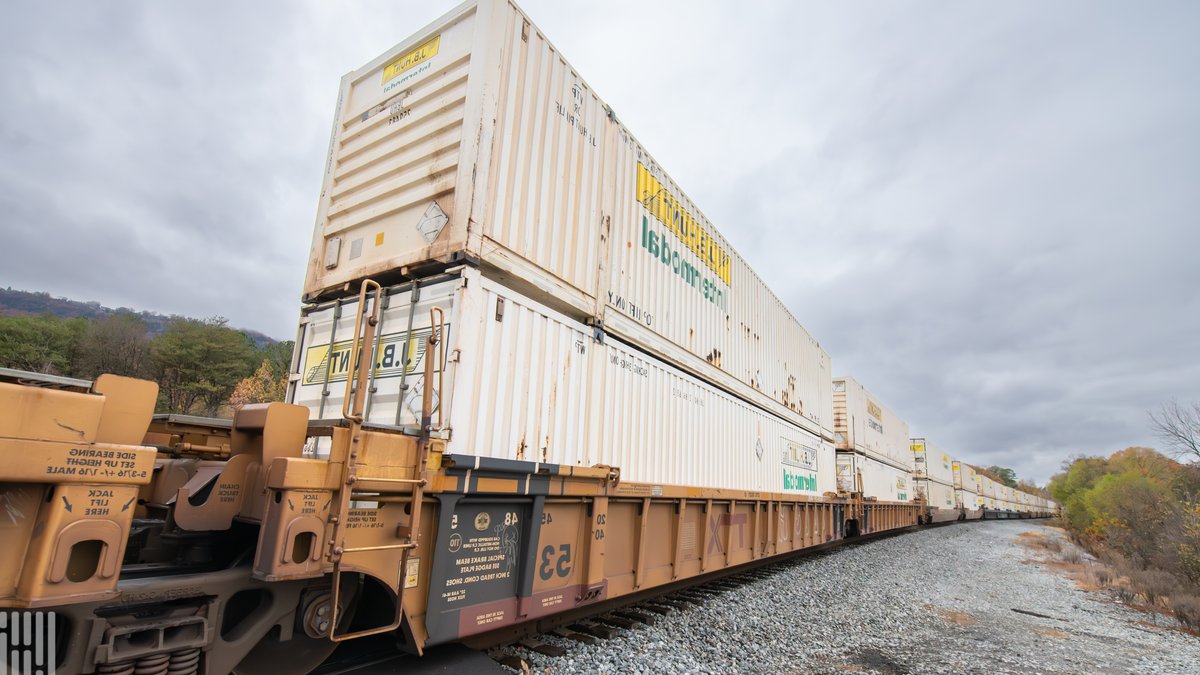
Management said the regulatory crackdown has drivers looking to work with financially stable carriers that have ample safety protocols in place. J.B. Hunt’s intermodal unit is also seeing benefits, with record volumes across the network coming out of the downturn.
J.B. Hunt’s financial performance has improved over the past year, with the company achieving an annual cost savings run rate of $135 million. Four straight quarters of year-over-year margin improvement came without a material benefit from pricing.
Intermodal pricing normally lags the TL market by two to three quarters.
J.B. Hunt’s dedicated pipeline ended the second quarter at an all-time high, and the company’s brokerage unit returned to profitability for the first time in 14 quarters. Across the industry, brokerage margins likely improved in July as spot rates cooled while contract pricing continued to reset higher.
They are well-positioned to capitalize on the current market trends.
As the freight industry continues to evolve, J.B. Hunt’s presentation highlights how structural supply-side constraints are creating a long-term competitive advantage for large, financially stable carriers. With its strong intermodal unit and dedicated segment, it is well-positioned to capitalize on the current market trends, including the truck crash charges and other regulatory developments.

RXO Gains Ground in Freight Market


